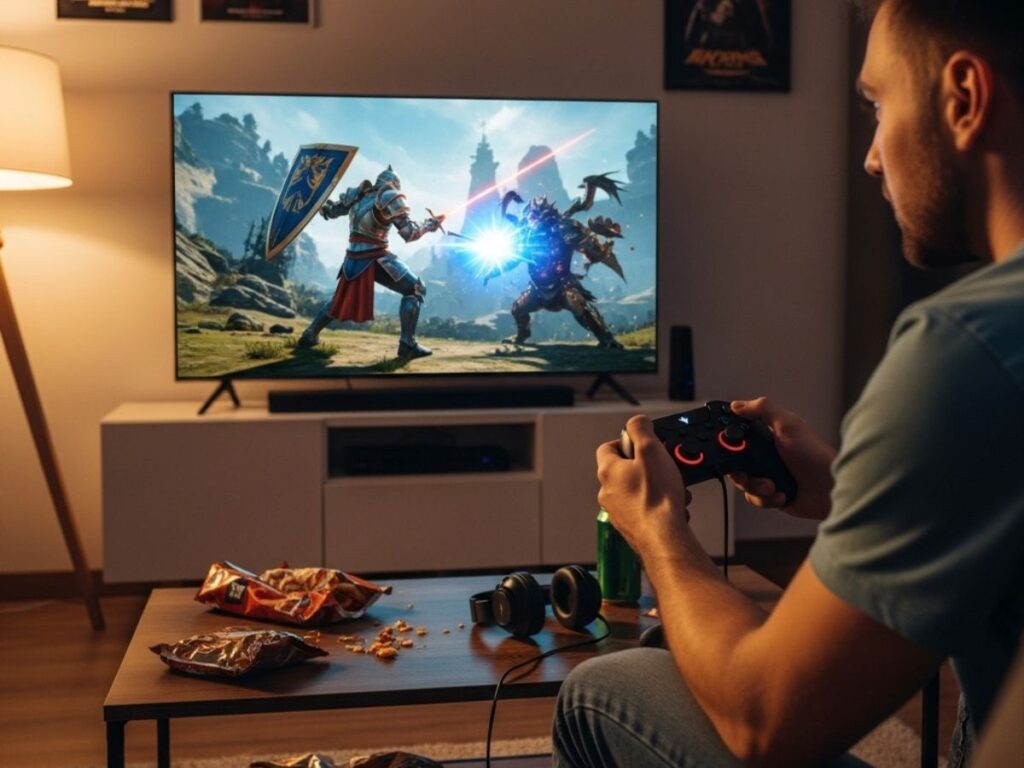
Video games have grown from a niche hobby into a global phenomenon, enjoyed by millions across all age groups. While many players see gaming as a fun way to unwind or connect with friends, concerns about video game addiction have persisted for decades. Are video games truly addictive, or are we falling for common myths that exaggerate their impact? In this article, we explore the line between healthy gaming and potential addiction, separating fact from fiction.
Common Myths About Video Game Addiction
Myth 1: All gamers are at risk of addiction
Not every player becomes addicted. Most people enjoy gaming without it negatively impacting their lives. Addiction tends to affect a small subset of individuals with pre-existing behavioral or psychological vulnerabilities.
Myth 2: Gaming addiction is as serious as drug addiction
While gaming can alter brain chemistry and reward pathways, research shows that it is generally less harmful than substance addictions. Comparing the two directly can be misleading.
Also read; Fortnite leak hints at major Star Wars live event in Chapter 6 Season 4
Myth 3: Violent games make players addicted or aggressive
Numerous studies have found no conclusive link between violent games and addiction or aggression. Motivation for playing is usually social interaction, achievement, or relaxation.
The Reality About Gaming Addiction
Fact 1: Gaming can become compulsive
For some individuals, excessive gaming may interfere with work, school, or personal relationships. This is referred to as gaming disorder, recognized by the World Health Organization, but it affects only a small percentage of players.
Fact 2: Social and psychological factors play a role
Loneliness, stress, and other mental health issues can contribute to compulsive gaming. It is often a coping mechanism rather than an addiction to the game itself.
Fact 3: Most gaming is healthy and beneficial
Moderate gaming can improve problem-solving skills, hand-eye coordination, and social connections. Like any hobby, the key is balance and awareness.
How to Identify Unhealthy Gaming Habits
-
Neglecting responsibilities or social life to play games
-
Feeling anxious or irritable when unable to play
-
Playing longer than intended consistently
-
Using gaming to escape real-life problems
If these signs persist over months and disrupt daily life, it may be time to seek guidance from a mental health professional.
Tips for Healthy Gaming
-
Set daily or weekly time limits
-
Take breaks and stretch regularly
-
Balance gaming with other hobbies and physical activity
-
Communicate openly with family or friends about your gaming habits
While headlines often sensationalize video game addiction, the reality is more nuanced. Gaming is a healthy hobby for most, but like any activity, it can become problematic if taken to extremes. Understanding the myths and realities allows players and parents to enjoy gaming responsibly without unnecessary fear.
Also Read: How to choose the best monitor for gaming, refresh rate, resolution, etc
FAQs
Q1: Are video games inherently addictive?
No, most players enjoy them without problems. Addiction is rare and usually linked to underlying issues.
Q2: Can gaming addiction be treated?
Yes, therapy and lifestyle adjustments can help people regain control. Cognitive-behavioral therapy is commonly used.
Q3: Are mobile games more addictive than console or PC games?
Mobile games often use reward loops and notifications that encourage frequent play, but addiction depends more on the individual than the platform.
Q4: How much gaming is too much?
Moderation is key. Experts recommend balancing gaming with work, exercise, and social activities. More than 3–4 hours a day may be excessive if it starts affecting life responsibilities.